
How we make it
Good kava takes patience and the right conditions. Four years in the ground, on the right island, in the hands of someone who knows the cultivar. More than a thousand growers supply us, scattered across the archipelago and concentrated in Santo, Epi, Pentecost and the Banks. Nobody does that part better.
All of it can be undone in the hours after harvest. Kava begins giving up its aroma and character the moment it leaves the ground, and holding on to that takes work.
That part is ours. Thirteen steps, most of them invisible from the outside, all of them there so that four years of someone else’s work is not lost in a week.
Harvested
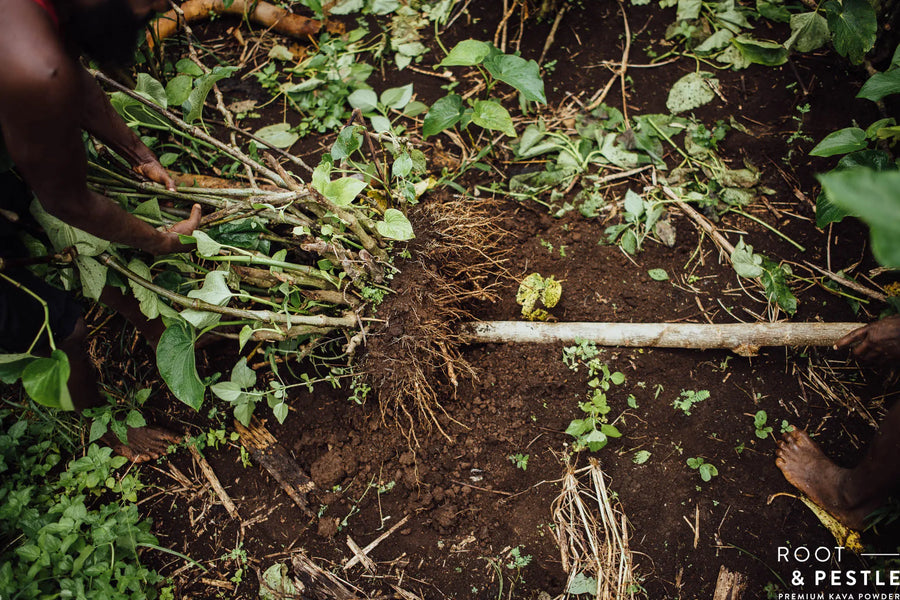
Only mature noble plants are lifted, four years and older. Where we can, one of our own kava people is in the field for the harvest, because a single misidentified plant would carry through every step that follows.
Four years and older
Trimmed, not stripped
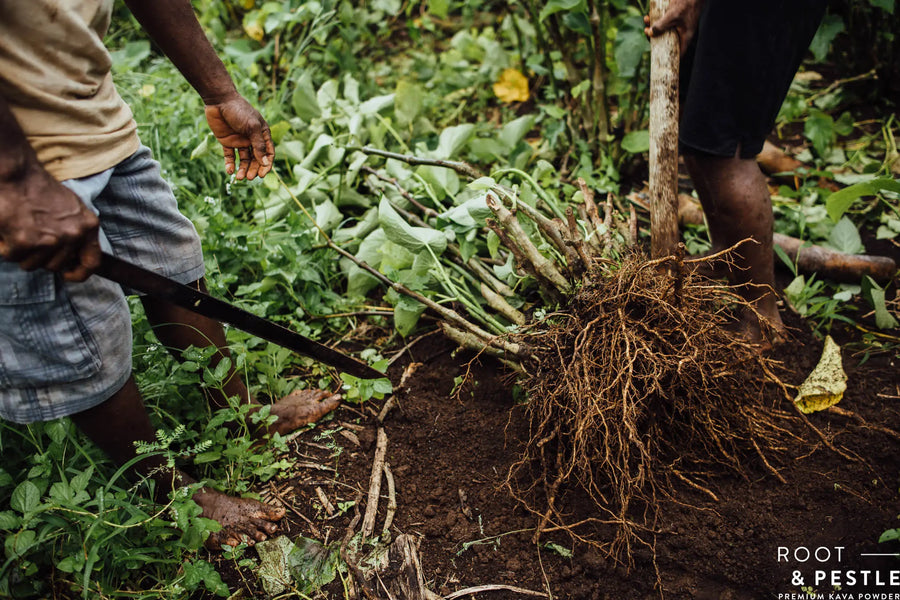
The root ball comes up and the tops are cut back for the trip out, but never cut flush. Two or three nodes stay on, and a couple of stalks keep their branches and leaves. None of that is processed. It rides along so the cultivar can be checked again at the factory, and it comes off before the roots are weighed. What gets left on is as deliberate as what comes off.
Checked on arrival
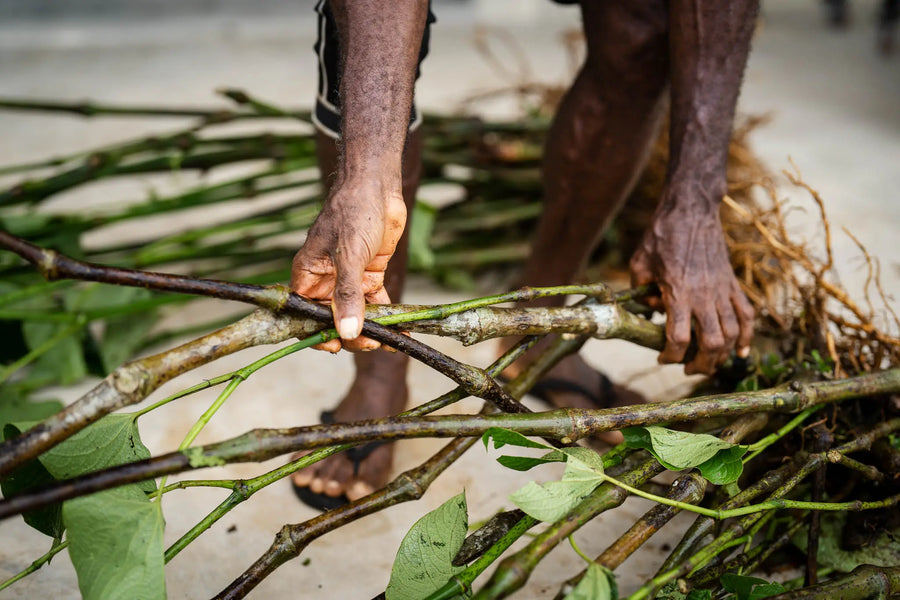
Several complete plants travel with every load, above-ground parts and all. Between those and the nodes left on each root ball, the field identification is confirmed a second time at the factory. Onsite analysts also assess the load independently for freshness and contamination, and their report has to match the harvest team's.
One cultivar per batch
Separated by hand
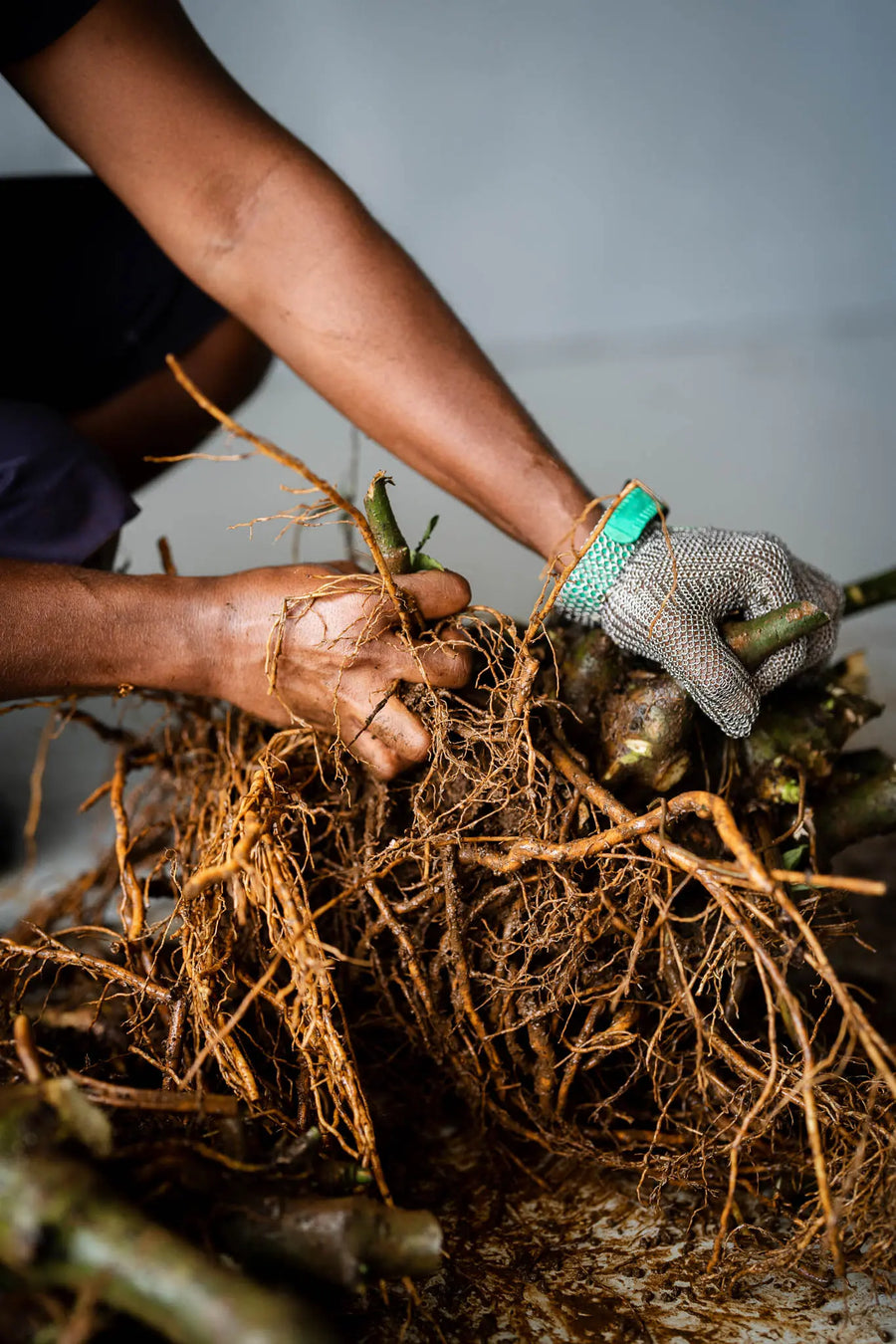
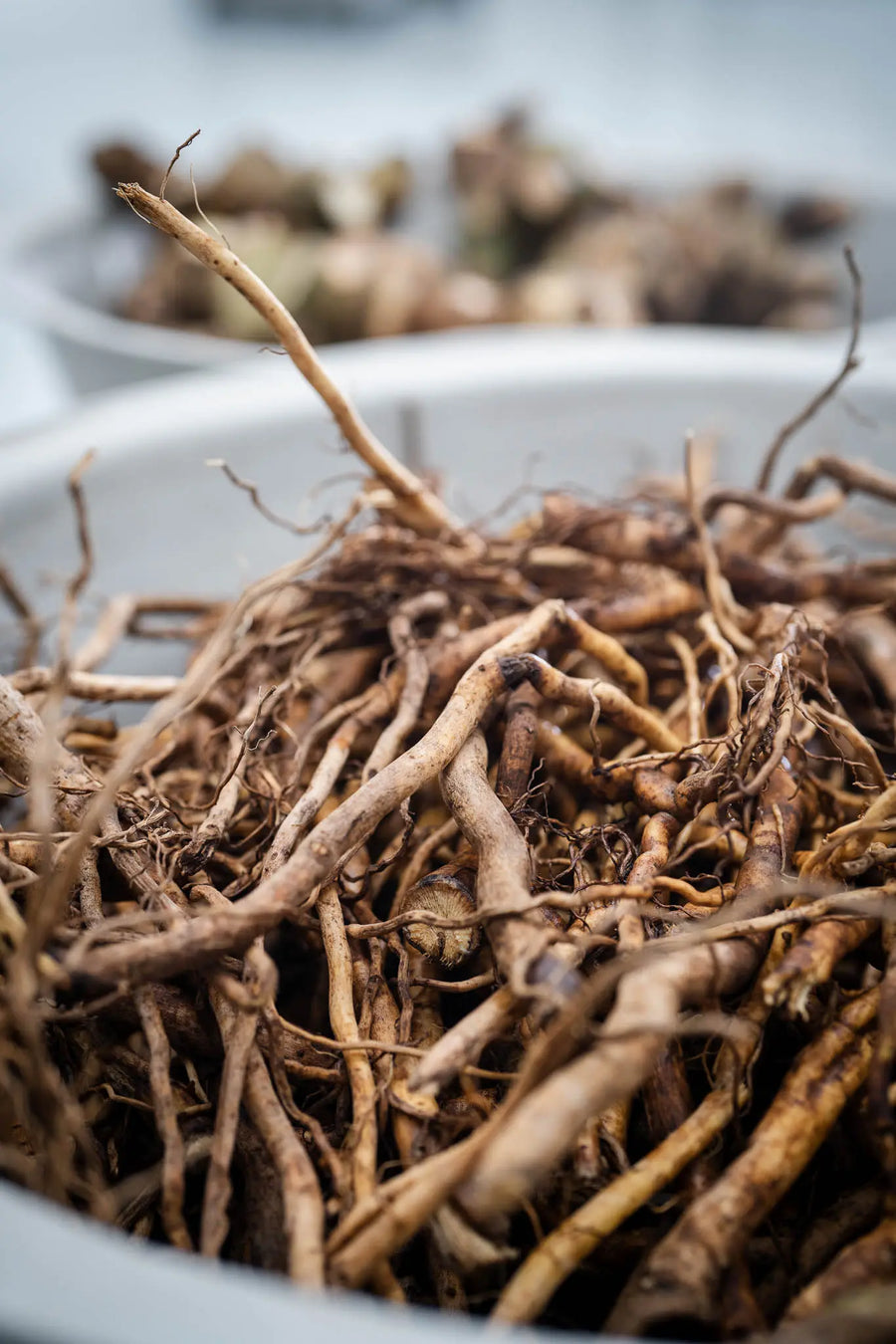
Laterals and basal stump are parted by hand, with pry bars and machetes, because nothing invented since does the job better. Their kavalactone content differs substantially, and everything downstream is machine work, and a machine wants one starting material. From here they are handled as two.
Sorted, then weighed a second time
Roots arrive tangled and things get caught in them. A weed root, a stone, and on Santo occasionally a piece of wartime shrapnel, which is what the metal detection and magnetic filtration are there for. Every root is then moved across by hand into a roots-only zone. The load is weighed once on arrival and again after all of that comes out, and it is the second number the grower is paid on. The gap between the two tells a grower exactly how clean their load was, and loads have got cleaner because of it.
Paid on the clean weight
Washed
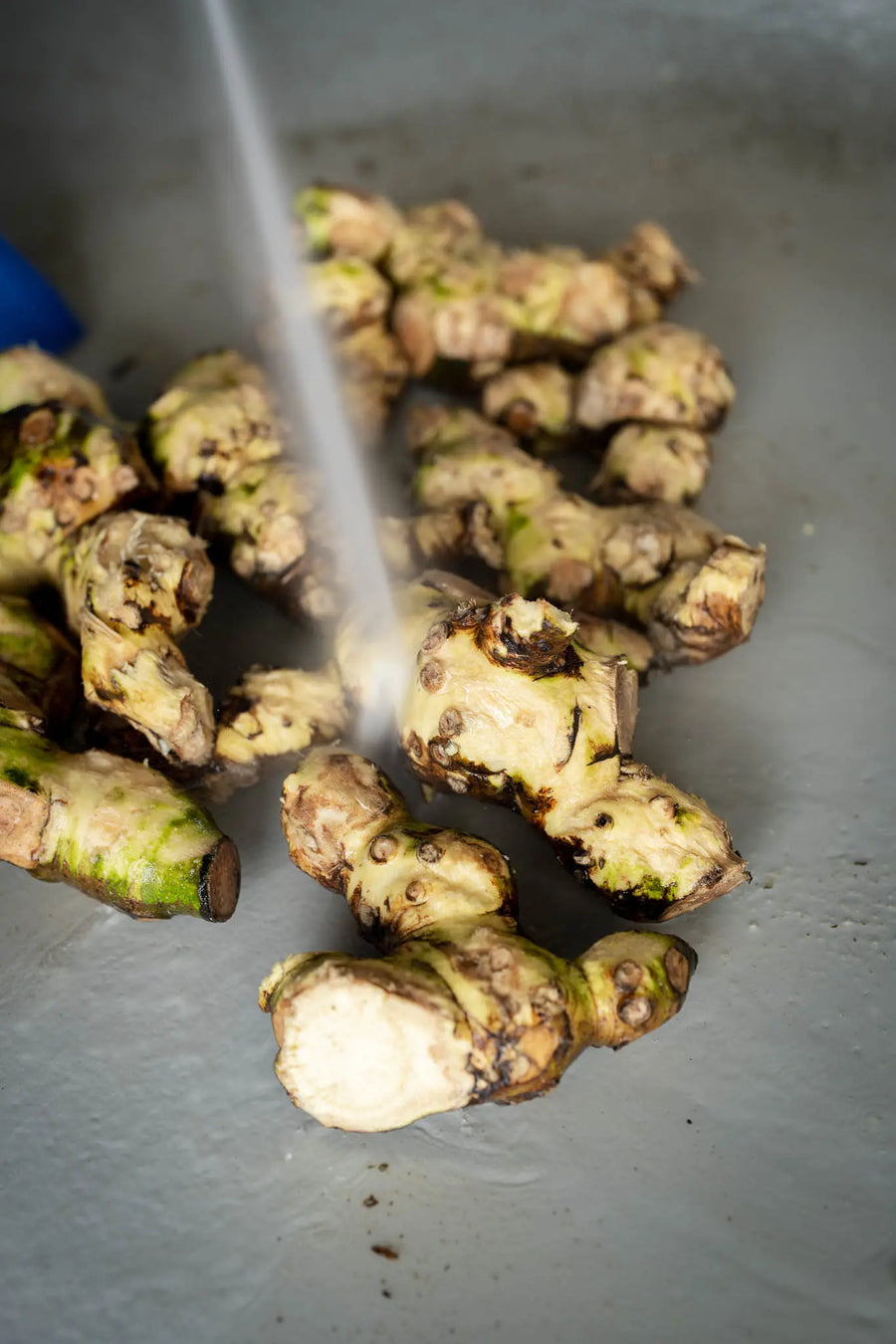
Every speck of dirt is blasted off at high pressure, using water monitored for sterility, pH and chlorine, purified and tested again on site immediately before it touches a root. This is also where we decide how much of the thin root bark to leave on.
Not a fingerprint left
Chopped and sliced
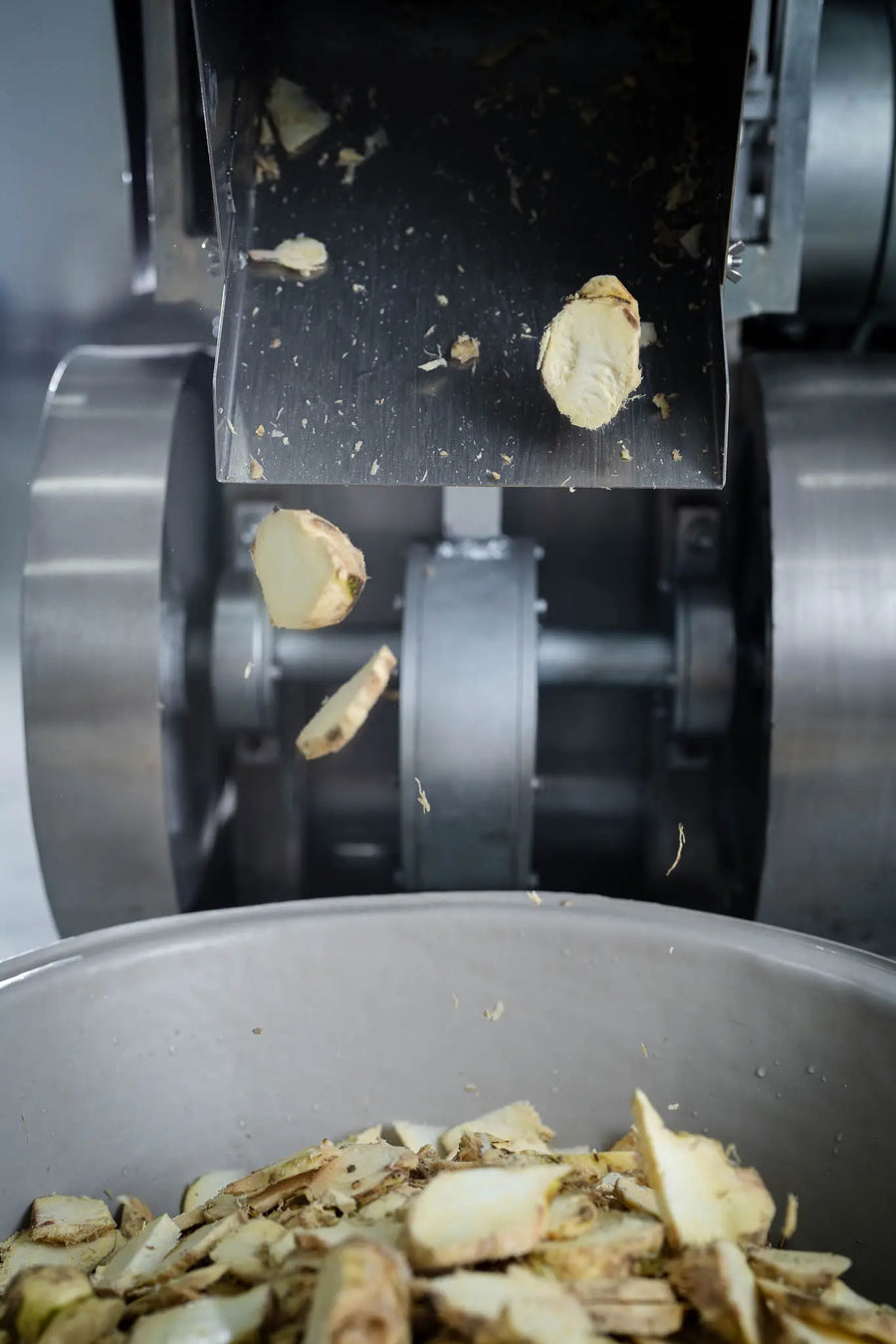
Kava root is brutal on machinery, and almost every machine that exists was built for something else. Close to every kind of chopping and slicing equipment ever made has been trialled in this factory. What survives the root is what we still use.
Evened out, then dried
This is the step the rest of the page exists to protect, and the one we say least about.
Drying tonnes of root that all arrive at different moisture levels, evenly, without over-drying some and under-drying others, is not something you solve inside the dryer. So the load is brought to an even moisture content before drying begins. That preparation is a process in its own right.
Then the temperature has to sit inside a narrow window. High enough to meet the microbiological limits we hold ourselves to, low enough that the flavour does not start to go. Flavour is the fragile thing here, and it is the first thing you lose if the window slips. The settings move as conditions move through the day, and nothing stays in the dryer a second longer than it has to. Our lab runs hundreds of experiments on most days, so we know where a batch actually sits instead of assuming.
The equipment is not something we show, and the settings are not something we publish.
Hundreds of lab experiments most days
Screened for microbes
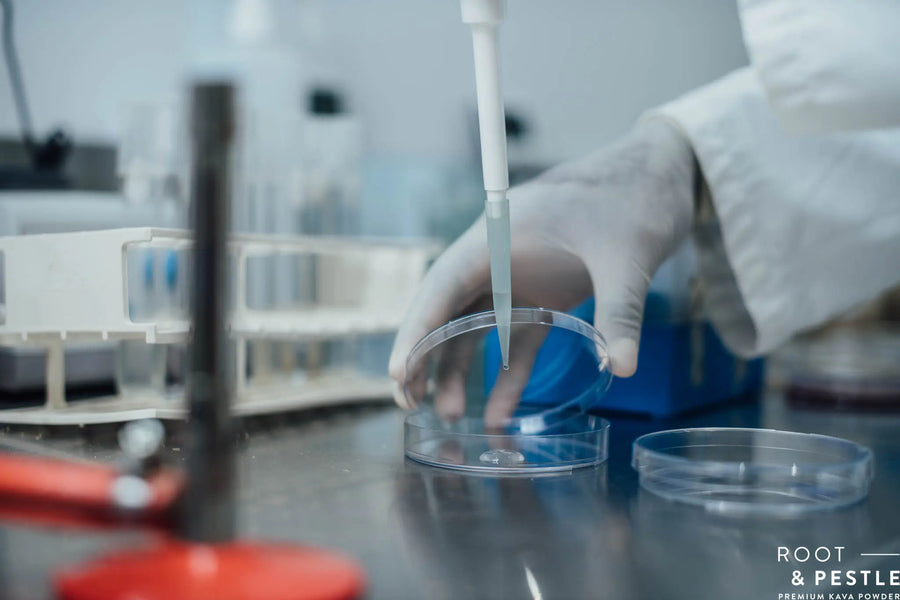
Product and equipment are sampled at every stage, and again after production, and again before shipping. The protocols reliably detect trace amounts of over a hundred species. Nothing leaves that the people who made it would not happily drink themselves. The finished batch then goes through the full suite once more and is checked against everything recorded on the way, so the last look at a batch is the most thorough one.
Over 100 species detectable
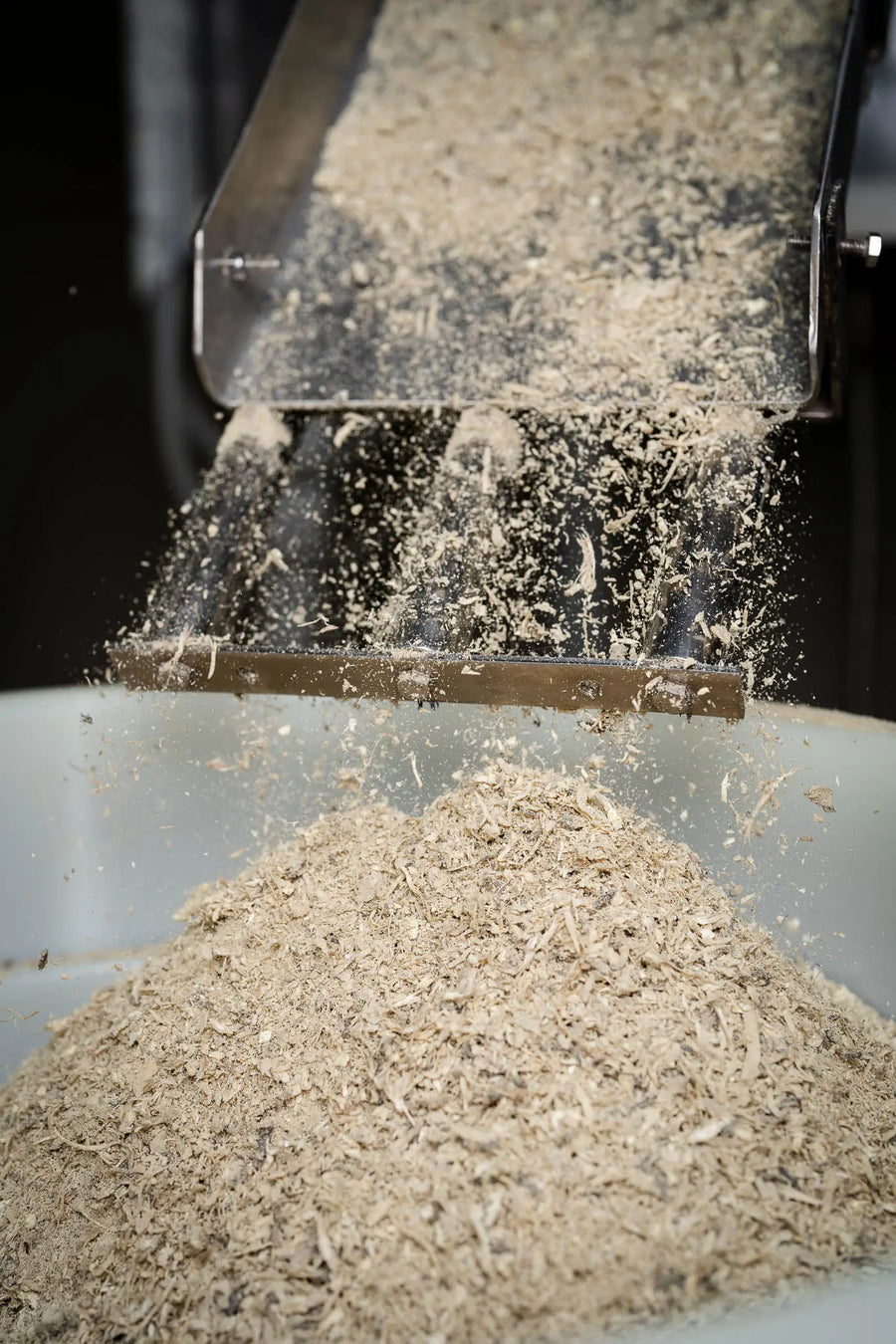
Milled
You will not get much out of a root by stirring it around in water. The surface area has to be enormous relative to the volume, which is the whole reason kava is a powder and not a chip.
Traditional grind stops at a medium grind that still holds the woody fibre. You knead it, you strain it, and the fibre goes in the bin. For instant, that insoluble fibre is taken out at the factory using water instead, and what remains is dried and milled ultra-fine. Made up in a cup, the two are the same drink. One ingredient either way, kava root.
Micronised powders are ground just as fine, but nothing is taken out, so the fibre you would have strained is still in the cup. The difference is not how finely it is ground. It is what is in it.
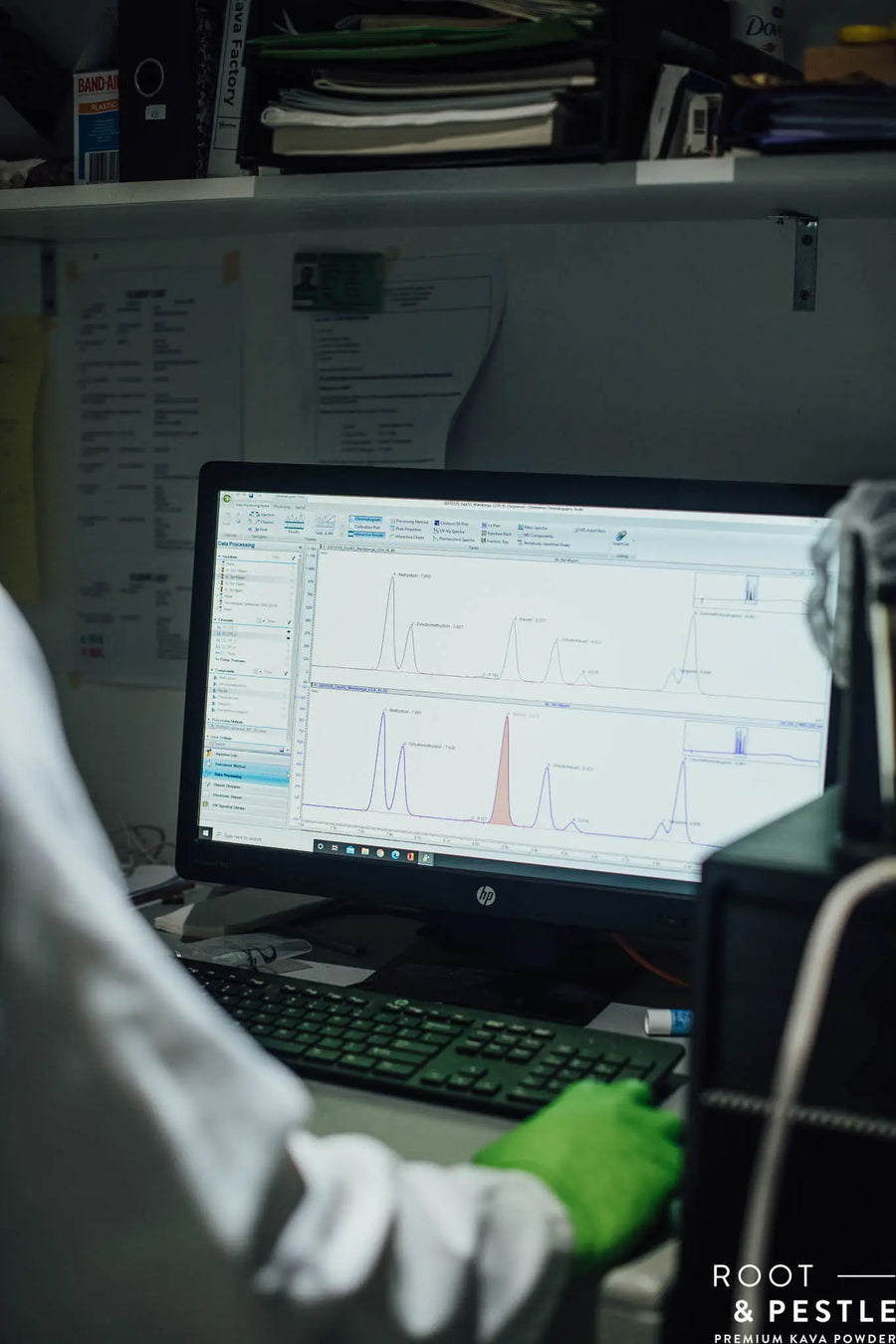
Chemotype measured
Every batch goes through UHPLC analysis, which produces the six digit chemotype and tells us the balance of kavalactones in that particular harvest. The certificate is published, so anyone holding a bag can look up exactly what it was tested at.
Every batch, published
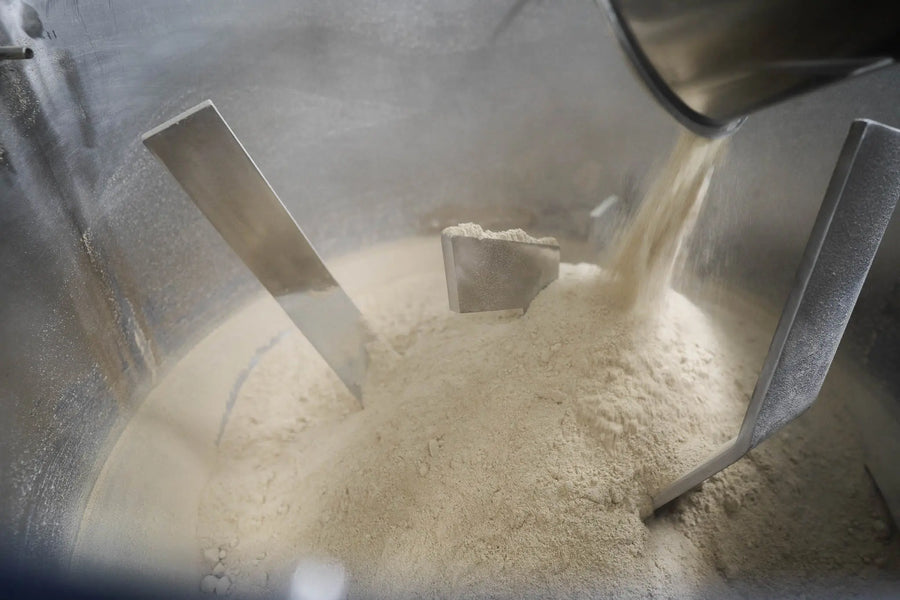
Blended as it grew
The powders from the different root types of one cultivar go back together in the ratio the plant grew in, which is not always the ratio that arrives. A load can come in short on laterals if whoever dug it was in a hurry, and correcting for that is most of what keeps one cultivar tasting like itself from batch to batch. Anything surplus goes to another line rather than into the blend. Chemotype analysis informs the ratio. It does not overrule the plant.
Standardised to how it grew
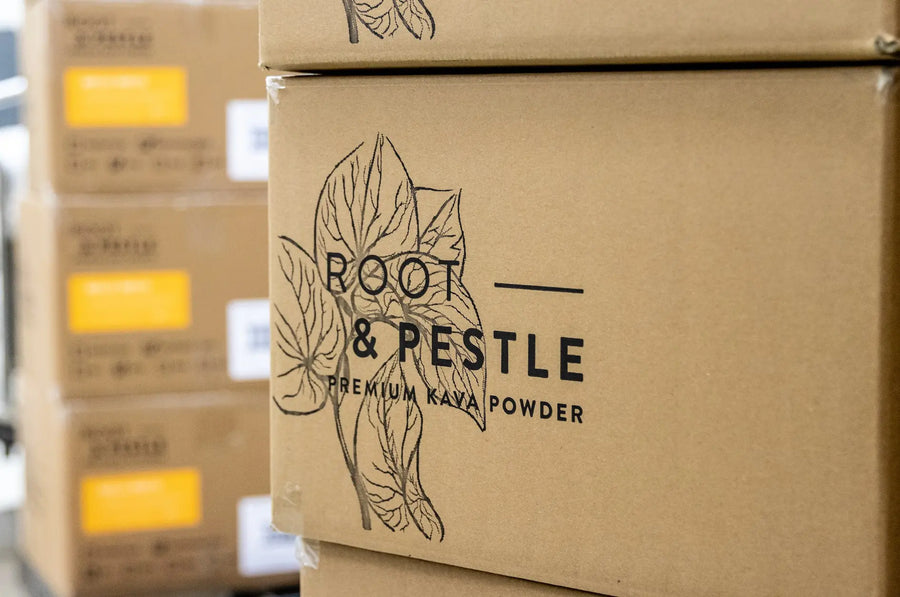
Sealed and shipped
Weighed on calibrated analytical balances, because nobody should buy a kilogram and get 950 grams. The oxygen is purged and replaced with nitrogen, each bag is vacuum sealed in low permeability packaging, and the batch and production date go on the label. All of it before the kava leaves Vanuatu.
Nitrogen flushed, vacuum sealed
See the results for yourself
Every batch has a certificate you can look up by cultivar, form and best before date.